
Adding Battery Storage to an Existing Commercial Solar Site
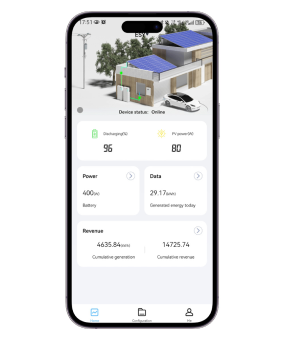
Adding battery storage to an existing commercial solar site allows businesses to use more of their installed solar capacity, reduce electricity costs, and improve energy flexibility without replacing the entire photovoltaic system. A typical retrofit project can increase solar self-consumption from 50%–70% to more than 85% when battery capacity matches the facility load profile. Systems installed after 2020 commonly use lithium-ion technology with 90%–95% round-trip efficiency, 10–15 years of service life, and modular capacities from hundreds of kilowatt-hours to several megawatt-hours. A properly designed commercial battery energy storage system can store midday solar production and supply electricity during high-price periods, reducing demand charges that may represent 30%–70% of commercial electricity bills.
Many commercial solar projects were originally designed only for daytime electricity generation. A factory, office building, hotel, or campus may produce large amounts of solar power between 10 a.m. and 3 p.m., while electricity demand often increases later in the afternoon. This mismatch creates opportunities for battery integration.
A solar site with a 1 MW PV array may generate 4–6 MWh of electricity per day under favorable conditions, but part of this energy can be exported when onsite consumption is low. Adding battery storage allows this excess generation to be captured and used later.
A battery retrofit changes the operating pattern of an existing solar asset by moving electricity usage from the time of generation to the time of highest demand.
The first stage of a retrofit project is reviewing existing energy data. Engineers usually analyze 12 months of utility bills, interval meter records, solar production data, and electricity tariff structures. Commercial facilities commonly use 15-minute or hourly consumption data because short demand peaks can significantly affect monthly charges.
The battery size is determined by several operating factors:
| Item | Typical Consideration |
|---|---|
| Solar capacity | Determines available charging energy |
| Facility demand | Determines discharge requirements |
| Electricity tariff | Defines possible cost reduction periods |
| Grid connection | Determines export and interconnection limits |
| Backup requirement | Defines usable battery capacity |
For example, a warehouse operating six days per week may have low electricity demand during weekends while solar production remains high. A 500 kW/1 MWh battery can absorb part of this excess generation and release electricity during evening operations. In commercial projects completed between 2018 and 2024, battery systems were increasingly sized around daily load patterns rather than simply matching solar capacity.
The selection of battery configuration affects installation complexity. Existing solar facilities generally use AC-coupled systems because the battery inverter is installed separately from the existing solar inverter. This allows the PV system to continue operating without major redesign.
A DC-coupled configuration connects the battery closer to the solar DC side. It can reduce some conversion losses, but it often requires changes to inverter equipment and control systems. For retrofit projects, AC coupling is frequently selected because construction time and equipment replacement requirements are lower.
| Configuration | Application |
|---|---|
| AC-coupled | Existing solar sites requiring independent battery addition |
| DC-coupled | New solar-plus-storage projects or major upgrades |
| Hybrid inverter system | Smaller commercial facilities with integrated equipment |
Electrical integration is followed by software configuration. The energy management system controls charging and discharging based on electricity prices, solar generation, and facility demand. A commercial battery energy storage system can operate under several strategies depending on the site's electricity conditions.
Peak shaving is one of the most common applications. When facility demand approaches a utility threshold, the battery supplies part of the required power. In areas with demand-based tariffs, reducing a monthly peak by 100–300 kW can create measurable savings.
Time-of-use optimization is another common method. Electricity prices in some regions can differ by 2–5 times between daytime and evening periods. A battery charged with solar energy at noon and discharged during evening peak hours allows businesses to reduce purchases during expensive periods.
A 1 MWh battery operating at 90% usable capacity can provide approximately 900 kWh of usable energy during each discharge cycle.
The economic performance of a battery retrofit depends on the local electricity market and project design. Battery costs have declined significantly since 2013, with lithium-ion battery pack prices falling by more than 80% by 2023 according to industry analysis. Lower equipment costs have allowed more commercial facilities to evaluate storage additions.
Financial evaluation normally considers:
| Savings Source | Typical Impact |
|---|---|
| Demand charge reduction | Often the largest source for commercial customers |
| Solar self-consumption improvement | Reduces exported solar energy |
| Time-of-use shifting | Uses lower-cost electricity periods |
| Grid support programs | Additional revenue where available |
A commercial building with high daytime cooling demand may receive limited benefit from storage because much of the solar generation is already consumed. However, facilities with evening operations, seasonal demand peaks, or high export levels often have stronger reasons to add batteries.
The physical installation process requires checking the existing electrical infrastructure. Engineers review transformers, switchgear, protection equipment, cable capacity, and available installation space. Some sites can integrate batteries using existing electrical equipment, while others may require additional switchgear or transformer upgrades.
Safety requirements have become more detailed as commercial storage deployment has expanded. Modern battery systems include battery management systems, temperature monitoring, smoke detection, emergency shutdown controls, and fire protection equipment. Standards such as UL 9540 and NFPA 855 are widely referenced for stationary energy storage installations in North America.
Battery enclosure design, thermal management, and protection systems are evaluated before commercial operation approval.
The project schedule depends on system size, permitting requirements, and utility coordination. Small commercial installations may require several weeks for equipment installation, while larger projects can require several months from engineering review to final commissioning.
A typical retrofit process includes:
-
Reviewing historical electricity consumption and solar generation.
-
Selecting battery power and energy capacity.
-
Completing electrical design and site evaluation.
-
Obtaining utility approvals and permits.
-
Installing battery cabinets, inverters, and control equipment.
-
Testing charging, discharging, and protection functions.
After installation, monitoring software provides operational data such as battery state of charge, charging cycles, efficiency, and demand reduction. Many systems maintain performance reports through cloud platforms, allowing facility managers to adjust operating settings based on seasonal electricity patterns.
Battery degradation is also considered during project planning. Lithium-ion batteries typically lose capacity gradually over time. A system designed with an initial capacity margin may maintain required performance after several years of operation. Many commercial projects assume approximately 70%–80% remaining capacity after 10 years, depending on cycling frequency and temperature conditions.
The available equipment range continues to expand. For example, modular solutions such as the commercial battery energy storage system category provide integrated battery cabinets, power conversion equipment, and energy management functions for commercial and industrial applications.
Existing solar sites can often gain additional operational flexibility through battery integration without replacing functional PV equipment. A facility that installed solar several years ago can add storage to better match electricity consumption patterns, reduce grid purchases during expensive periods, and improve the use of renewable generation already available onsite. As battery technology improves and commercial electricity pricing becomes more complex, solar-plus-storage retrofits continue to become a practical option for factories, hotels, campuses, and other large electricity users.
Browse the full discography — 312 verified releases, four DSP links per entry.